Low cortisol aim or high-energy flicks in Valorant and which style wins more duels
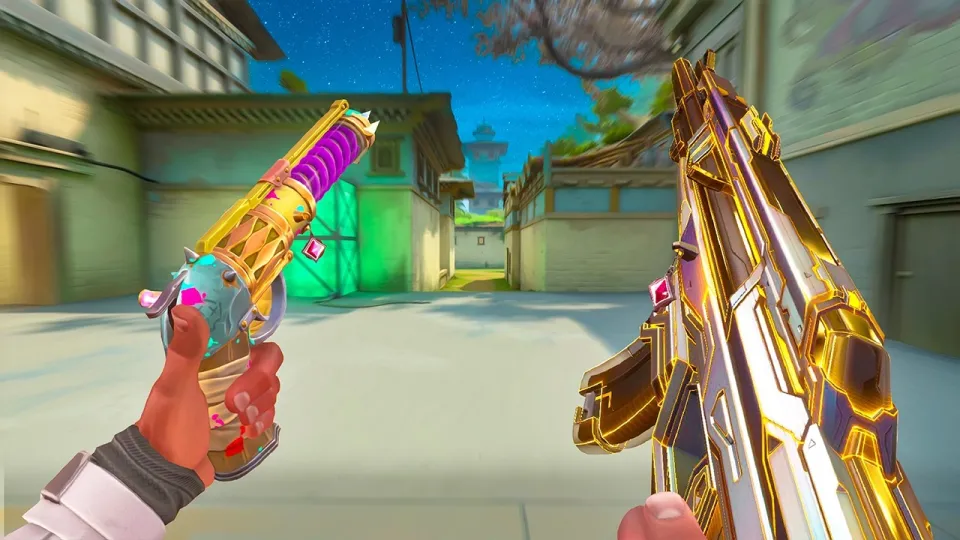
Video: low cortisol aim..
Want articles like this for your own video to promote it on YouTube and Google? Order them through the Telegram bot @sat_sit_bot. Articles with your video embedded are written and posted by the bot itself — on popular topical sites (no ads). Try it free: 50 articles on us.
· based on the channel Rawzu
Key takeaways
- Rawzu runs 400 DPI at 0.625 in-game sensitivity, a 1440x1080 resolution and crosshair 1-6-2-2.
- Gear in the video: Logitech G Pro X Superlight 2, Artisan Zero Soft mousepad, Zowie XL2566K 360Hz monitor.
- The footage is Phoenix gameplay on Icebox, an offensive duelist built around Blaze walls, Curveball flashes, Hot Hands and Run It Back.
- Calm aim means pre-placed crosshairs and micro-corrections instead of large reactive flicks after the enemy appears.
- Low cortisol aim is a training mindset, not a hardware or sensitivity setting: slower decisions, fewer panic sprays.
Low cortisol aim in Valorant is a style where you keep the crosshair already where the enemy will appear, correct with small movements and only click when the shot is real, instead of chasing heads with big reactive flicks. It wins more duels than flick-heavy play for most players because it removes the panic step between seeing an enemy and shooting. If you want the same baseline, start with a clean, stable setup: optimize your PC for Valorant with the Rawzu Hone link and then copy the habits below.
The phrase comes from a Rawzu clip titled "low cortisol aim..", published on 14 October 2026: Phoenix gameplay with almost no visible rush, crosshairs parked on angles and kills that look boring on purpose. The point is not that the player has slow reflexes; the point is that the reflexes are never needed because the position and the pre-aim already did the work.
What low cortisol aim actually means in Valorant
Low cortisol aim is a decision-making pattern, not a sensitivity value: you hold angles the enemy has to walk into, keep your crosshair at head height on the exact edge of cover, and let the target arrive under your reticle. The visible result is a calm aim style where the mouse barely moves before the shot, and the enemy dies at the moment they cross the line you were already watching.
Three things separate it from ordinary aim practice:
- Pre-placement. The crosshair sits where a head can legally appear, not in the middle of the wall or on the floor.
- Micro-correction. When the target is slightly off, the fix is a few pixels, not a full swipe across the screen.
- Trigger discipline. You shoot on the confirmation, not on the surprise, which is why the kill feed looks late but the duels are won.
High-energy flicking is not wrong; it is just expensive. Every large flick is a guess followed by a correction, and in a game with 0.1-second peek timings the correction is usually the part that loses the fight.
The exact setup Rawzu uses in the clip
Rawzu's listed settings in the video description are deliberately unremarkable, which is the argument: the calm aim comes from repetition, not from a magic number. The full list is:
- Sensitivity: 400 DPI with 0.625 in-game, a low-sens setup that favors arm movement and stable tracking.
- Resolution: 1440x1080, a stretched 4:3-style aspect that widens targets on screen.
- Crosshair: 1-6-2-2 (outline 1, thickness 6, length 2, gap 2).
- Mouse: Logitech G Pro X Superlight 2.
- Mousepad: Artisan Zero Soft.
- Monitor: Zowie XL2566K at 360Hz.
A 360Hz panel and a light wireless mouse do not create calm aim, but they remove excuses: when frames are consistent and the pad has predictable stopping power, small corrections land where you sent them. That is why the low-sens plus large-pad combination keeps showing up among players who favor control over speed.
Why the Phoenix kit rewards a calm duelist
Phoenix is an offensive duelist who specializes in hunting enemies while crippling their ability to fire back, and his kit is built to make a patient player unkillable rather than a fast one. Blaze creates a wall that blocks vision and damages anyone who walks through it, Curveball blinds enemies even when they are hiding behind corners, and Hot Hands adds a molotov plus self-heal. Run It Back lets him die, respawn at the marker and re-enter the fight with full health.
The practical effect is that Phoenix can choose the terms of a duel. You flash a corner, take the space, and then hold the angle the retreating enemy must cross, which is exactly the situation where calm aim converts. On Icebox, the map in the footage, that means using the wall to split a lane, clearing the close angle first and pre-aiming the long one second. A player who flicks first and thinks second wastes the flash window; a player who pre-aims uses it.
How to train calm aim without turning into a statue
Calm aim is trainable, and the routine is shorter than most aim guides suggest. The goal is to make pre-placement automatic so that the only conscious decision left in a fight is whether to shoot.
- Deathmatch with a rule: never shoot until the crosshair is on the head. Accept lost duels; the rule matters more than the score.
- Hold one angle per round in ranked and count how often the enemy walks into your crosshair. If the answer is rarely, your position is wrong, not your aim.
- Lower your effective sensitivity if you cannot stop a flick on a target. Rawzu's 400 DPI at 0.625 is a reference point, not a requirement.
- Warm up on tracking, not on flicking: smooth horizontal movement over a bot keeps the wrist relaxed and the arm ready.
- Review clips at half speed and look for the moment your crosshair leaves head height. That dip is the cortisol spike, and it is what you are training out.
Calm does not mean passive. The style still requires fast decisions about which angle to take and when to push with Phoenix's ultimate; it just removes the wasted motion between seeing and shooting.
Common questions about calm aim and the clip
Viewers of the video split into two camps: those who want the settings and those who suspect the footage is too relaxed to be real ranked play. The settings are all published, and the gameplay is consistent with a low-sens, control-first approach rather than with highlight-reel flicks.
A few recurring doubts are worth addressing directly. First, calm aim does not require a 360Hz monitor; the refresh rate helps consistency, but a 144Hz panel with stable frame times will not hold you back at most ranks. Second, the stretched 1440x1080 resolution makes targets wider but also makes movement feel faster, so give it at least a week before judging it. Third, a light mouse and a control pad like the Artisan Zero Soft matter mostly for stopping power, which is exactly what micro-corrections need. Finally, the style is not tied to Phoenix; it transfers to any agent, though duelists with self-sustain make mistakes cheaper.
Useful links
- Optimize your PC for Valorant — the Hone link from the video description.
- Rawzu's original music on Spotify.
- Rawzu's Discord server.
The verdict on low cortisol aim
Low cortisol aim is the better default for Valorant players who lose duels to their own reactions rather than to their opponents' speed, and the Rawzu clip is a clean demonstration of the principle rather than a trick. The published setup, from 400 DPI at 0.625 to crosshair 1-6-2-2, is a starting point you can copy in a minute, but the real change is holding angles that come to you and shooting only on confirmation. Phoenix rewards that patience with flashes, a wall and a second life, which is why the pairing works so well on Icebox. If you take one thing from this breakdown, take the rule: place the crosshair first, then let the enemy make the mistake. Thanks to the Rawzu channel for the footage and the settings, and if you want the same stable baseline, set up your PC for Valorant through the Hone link before your next ranked session.
Source: low cortisol aim.. · Markdown version
Questions & answers
What does low cortisol aim mean in Valorant?
It describes a calm aim style where the crosshair is pre-placed on the angle an enemy must cross, corrections are tiny, and the shot is taken only on confirmation. The name is a joke about staying relaxed instead of panicking into a big flick.
Do I need Rawzu's exact sensitivity to play this way?
No. Rawzu uses 400 DPI at 0.625 in-game, which is a low-sensitivity control setup, but the style works at any value where you can stop a correction on a head. Treat the number as a reference and adjust until your micro-movements stop overshooting.
Is a 360Hz monitor required for calm aim?
It is not. A Zowie XL2566K at 360Hz gives smoother motion and more consistent feedback, but stable frame times on a 144Hz display will not block you at most ranks. Consistency of frames matters more than the raw refresh number.
Why does Phoenix suit this playstyle?
Phoenix can force duels on his own terms with Curveball flashes, Blaze walls and Hot Hands, and Run It Back gives him a second life. That means a patient player can take space, then hold the angle the enemy must retreat through instead of chasing the kill.